There is an idea that we are living our lives inside of a digital simulation, a massive computer program the size of the universe. The simulation began running long ago, sometimes in our ancient past creating the virtual reality we see is our everyday world right now. This idea has a huge impact right into the core of our most intimate beliefs about everything, from healing and disease, to war and peace, life and death, religion, God, angels, aliens, UFO’s and beyond.
It can sound like a science fiction movie and it was to me until I started to think about the evidence coming from different cultures. I want to make it clear that I’m not a follower of any specific tradition, but I do respect them and use them to discover new leads that will tell me more about the world we live today. This is why I’m asking the forbidden question — Is it possible that every day of our lives is actually happening inside of a simulated reality that looks and feels totally real to us?
What Is The Simulation?
The simulation is an experience of the environment in a relatively safe way minimizing the risks of injuries to ourselves or to one another.
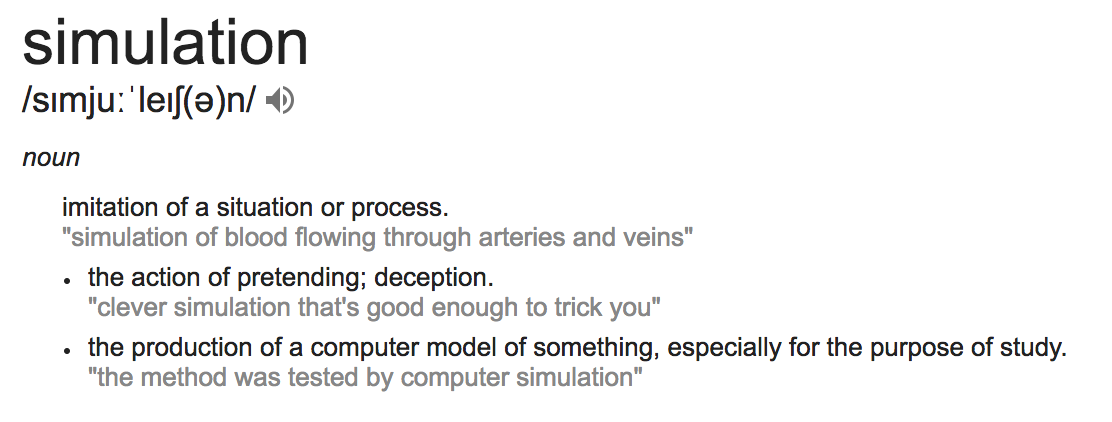
The idea of digital environment is nothing new for us today as we already use simulated environments in the number of places. We are already using the simulations in a numerous ways in our everyday world around us. The news here is that we’re talking about the living within one of those simulations right now, in a massive simulation the size of the universe. If we were, would you know that? Would you know the difference between what is called a base reality, or fundamental reality and a simulated one? The idea itself is actually a new language of something that we have heard very long time ago.
The characteristics of a simulation
- World of a simulation has a place where it begins and it has a place where it ends. What happens in between is based on a mathematical algorithms of cycles in patterns that repeat again and again on different scales.
- There are rules that govern the simulation and the idea is that as people in the simulation become more familiar with the environment as they learn those rules life gets better.
- In the simulation, the users always have access to an external reality. They can tap into the guidance if they have the trouble, or if they need clarification they can always communicate beyond the simulation itself.
- In the simulation, the user cannot tell the difference between the simulation and the real world.
Ancient View Of The World
With this in mind let’s go back and look at what our most ancient ancestors and the number of different religions tell us about the world that we live in today.
- Almost universally every religious tradition say that the world has a beginning and the end. That it does not continue forever. That is almost a universal truth throughout the religions.
- The events that are unfolding between the beginning and the end are based on natural rhythms and cycles.
- They tell us that there are rules and that living in this world will get better as we learn those rules. Divine commands in the Bible could be just one example.
- Every ancient spiritual tradition tells us that beyond the world of our everyday scenes that we have access to the guidance and wisdom that is not the part of this world. We have access to external reality or external guide.
Long concentration on the liberating spiritual eye has enabled the yogi to destroy all delusions concerning matter and its gravitational weight; thenceforth he sees the universe as an essentially undifferentiated mass of light.
— Paramhansa Yogananda
When we make this comparison you can see the similarities. So is it possible that our ancestors were trying to inform us of something that they knew and we are just beginning to awaken? There is a possibility that we are actually in artificial world, a temporary world that has beginning and the end, and we have an access to external guidance when we need that access. We can’t tell real from the illusion. Think about the sanskrit word Maya it actually means Illusion, and enlightenment like in Buddhist traditions means escape Maya.

Be First to Post Comment !
Đăng nhận xét